Sled Hill is a Game Boy Color puzzle game: once the sled moves, it does not stop until something stops it. The plan called for 60 puzzles on four hills. The first toy board was too easy to stumble through, so a longer one called Twin Cracks became the board that proved sliding, thin ice and rewind were worth building on. The full game and its art went in and shipped that day. Since then Coach Pip arrived with practice boards, the hardest hill was retuned, and huts learned to catch sleds.
Empty huts now catch sleds, landing dots show where each push ends, and Coach Pip teaches the new rule. All 60 puzzles passed and the real-time soak cleared seven campaigns.
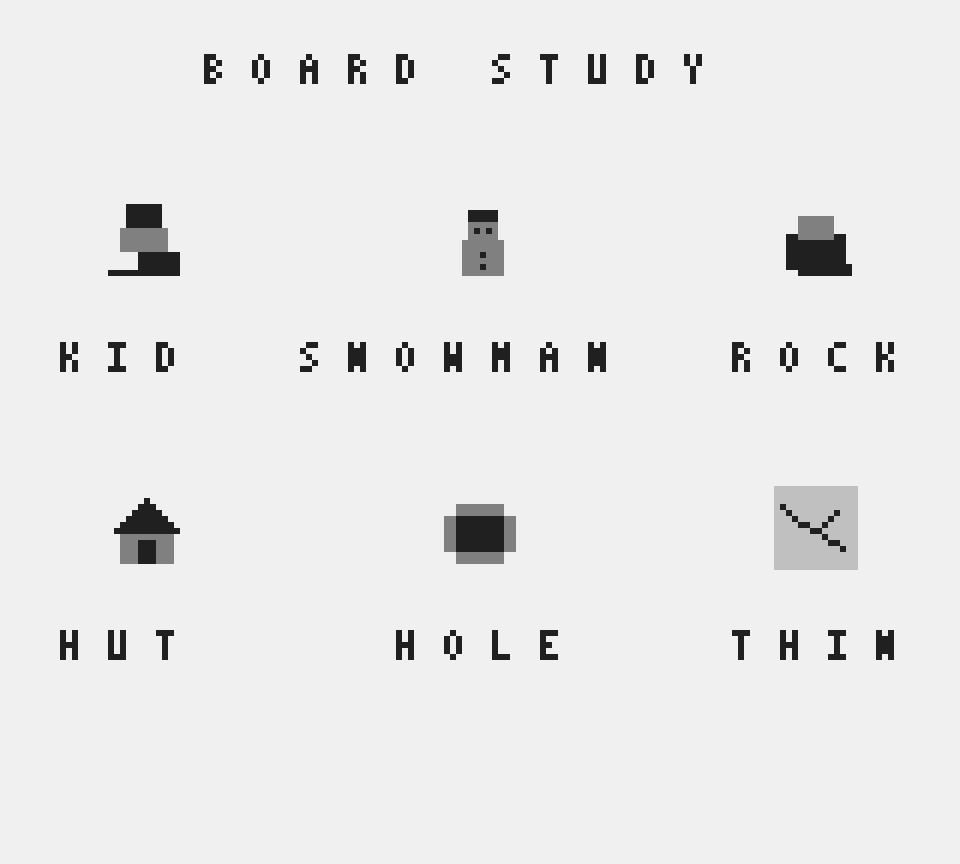
The six rules were frozen: push to slide until you hit something, switch between kids, kids stop each other, get every kid onto a hut, thin ice cracks into a hole, and B rewinds one move. The plan named 60 puzzle slots on four hills of 15. The only art was a grey sheet showing a kid, snowman, rock, hut, hole and thin ice, to lock the shapes and size before any real art.
The grey board study sheet labelling Kid, Snowman, Rock, Hut, Hole and Thin ice.
2ToyOne rough mechanic, to prove the core is fun.
· G1 toy, first try
The first toy board was sent back
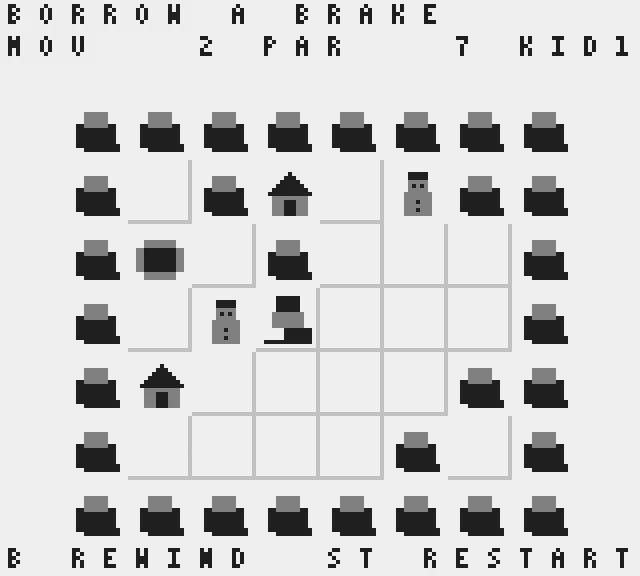
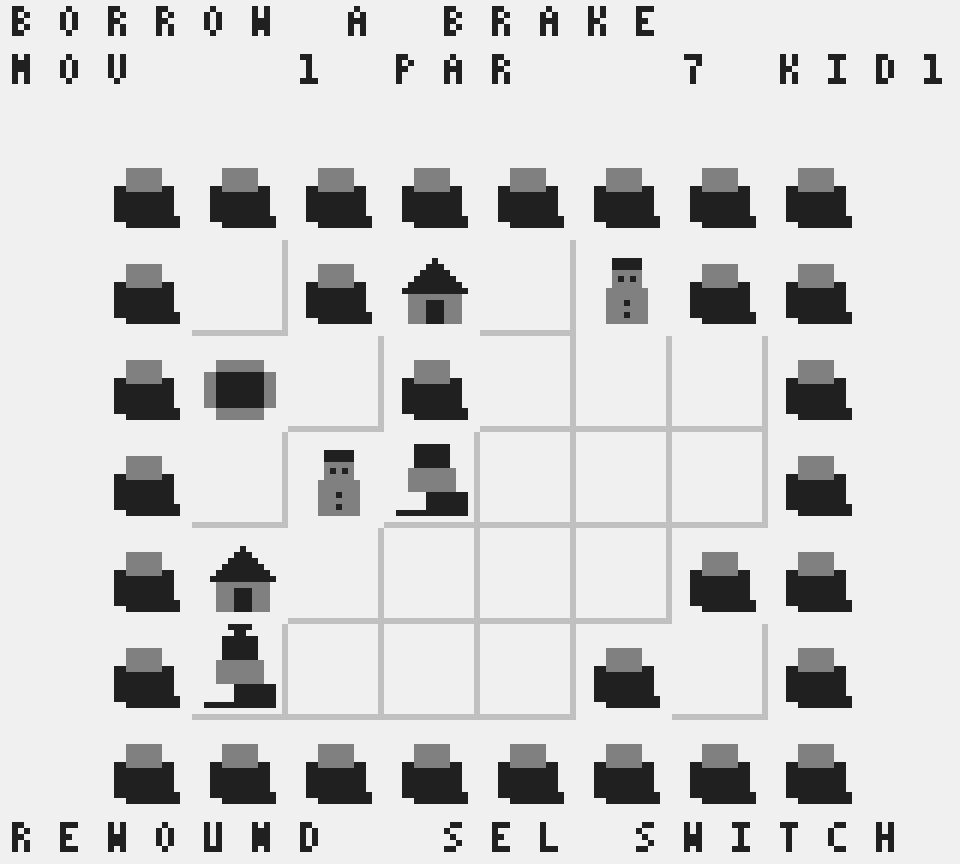
Borrow a Brake was a small grey board with two kids and two huts. A first-time player cleared it in 41 seconds, discovered that a hut does not stop a sled, and then used the second kid as a movable brake. They wanted another go once they beat par. The review said the two sleds looked too alike and covered the huts, and the board was too short, so the team made a longer one. A check on the real cartridge also caught a rewind bug: pressing B moved a kid to the wrong square.
The grey Borrow a Brake board with two kids, huts and rocks around a bordered field.
Turning point
· G1 toy
Twin Cracks proves the whole idea
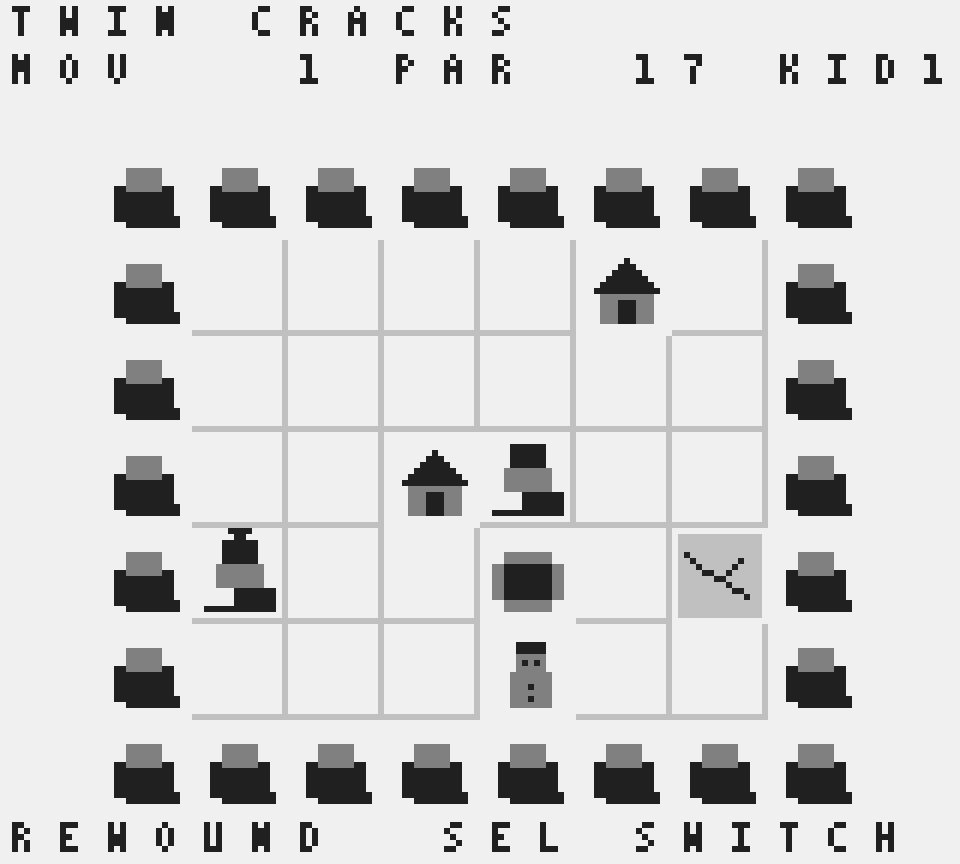
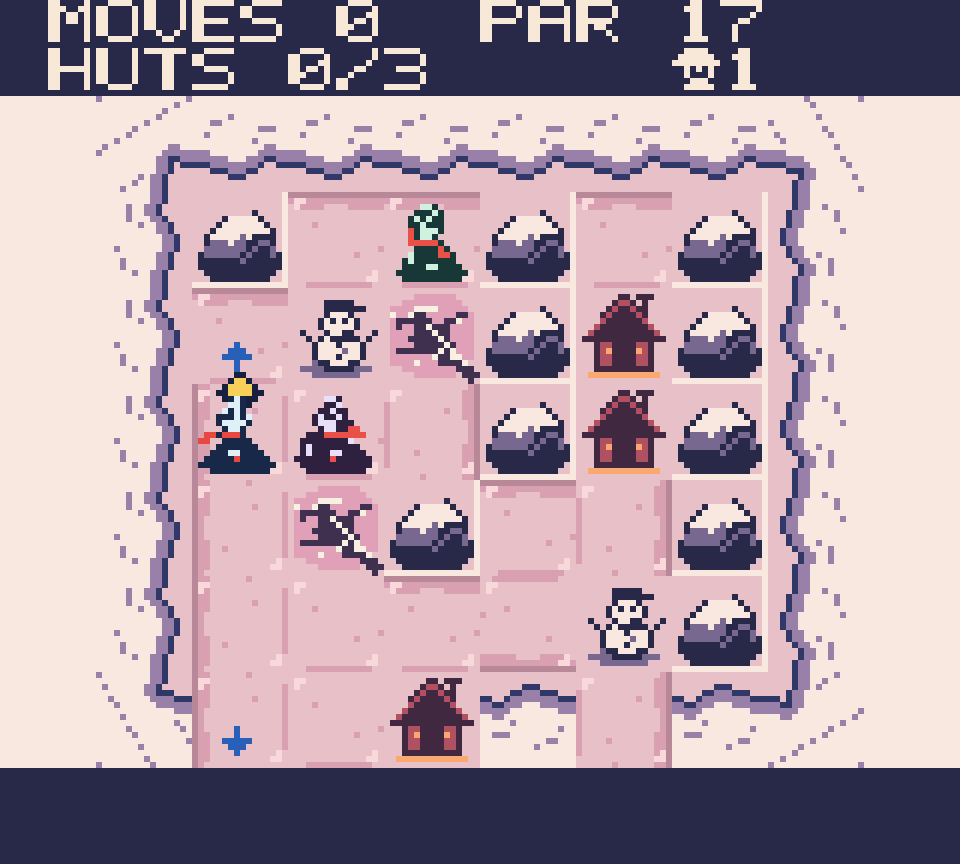
A longer board called Twin Cracks has par 17 and 637 positions where you get stuck and need to rewind. A skilled computer player cleared it in 16 slides while all four random players failed, and a first-time player cleared it in 19 moves and wanted to beat par. The 28 second recording shows a fall into a hole, two rewinds and a winning route. A reviewer thought a shortcut to the first hut was misleading on a board this deep, so Twin Cracks was kept for late in the game.
The early Game Boy Color movement toy in action.One route through the first test slope.The grey Twin Cracks board with two huts and a thin ice slab beside the kids.
3ContentLevels, art and sound go on top.
Turning point
· G2 Content
All 60 puzzles, with saves
All 60 boards across four hills went into the cartridge with battery-saved progress and a rewind that remembers up to 16,128 slides. A full solver proved every board can be solved and worked out each par, and two complete play-throughs matched slide for slide at 588 slides. Help, options, level select, ending and credits were in place, though the art was still grey.
· G3 Polish
Snow, hats and a warning before the hole
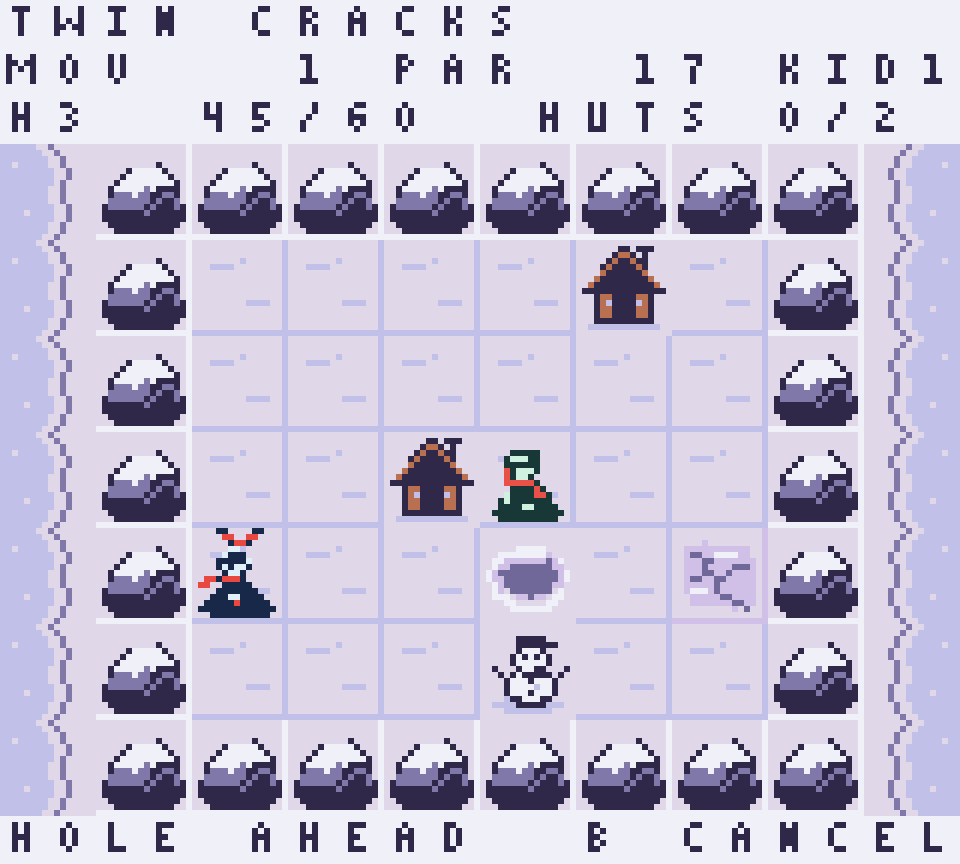
Original art arrived for all four hills: snowbanks, a chevron over the kid you control, and a different hat or shape for each of the three kids. Before a deadly slide the hole pulses and the footer says HOLE AHEAD, B CANCEL. A trailer check found text running off the screen edge on three lines, so those lines were fixed and a text-width check was added.
Twin Cracks in full color with the warning HOLE AHEAD and B CANCEL in the footer.
5Ship checkIt has to run on real hardware.
Turning point
· G4 Ship
Shipped after a 30 minute soak
A true-speed run of 30 minutes cleared 339 boards over five full campaigns with no crash. The outside review noted the trailer skipped the early braking boards, so the handoff page now says in words to park one sled to catch another. A handheld test booted the game and passed slide and rewind through an on-screen touch pad. It did not test the physical buttons.
6UpdatesWhat changed after release.
Turning point
· U1
Coach Pip and an easier first hill
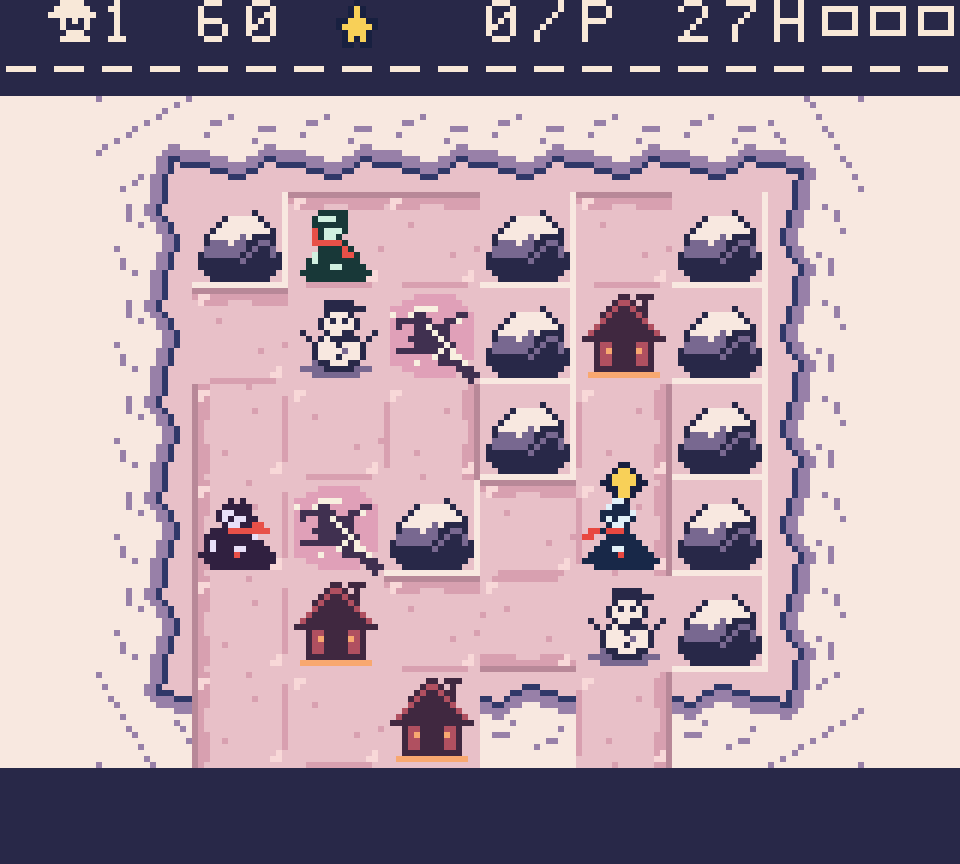
Coach Pip's five practice boards now come before the campaign, and nine layouts were retuned without changing any rule. In the original, a beginner computer player stalled on board 4 of the first hill; now it clears all 15. On Redcap Ridge the median number of dead ends fell from 3,848 to 614. New palettes, a compact HUD and animated art arrived for each hill.
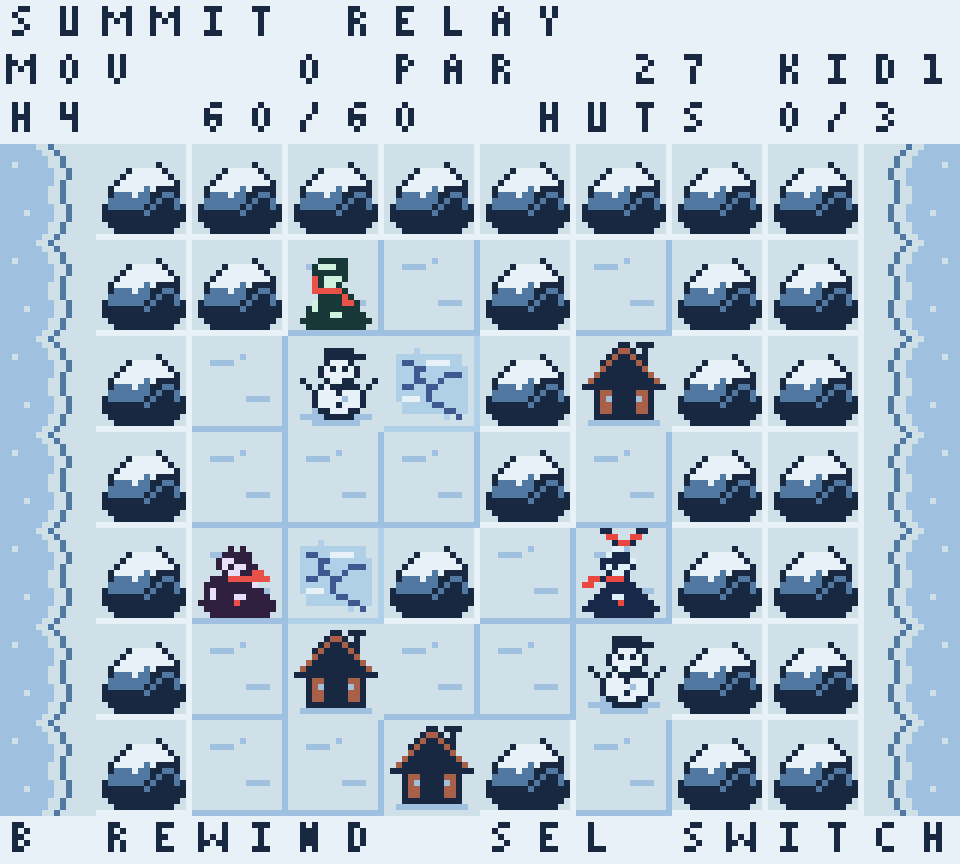
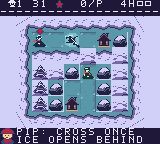
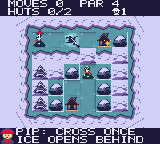
Before: the Summit Relay board on the original blue Redcap Ridge look.After: the same hill in a warm pink palette with a one-row HUD.
· U1 review fixes
Clearer edges and a split fall prompt
A reviewer thought huts on the edge looked like they were hanging over the boundary and some pink cells had weak stop shapes. Snowbank caps and small ticks now mark the edges and ice cells. The cramped restart text was split into B REWIND and START RESTART, and the HUD labels par with P and huts with H.
Turning point
· U2
Huts now catch sleds
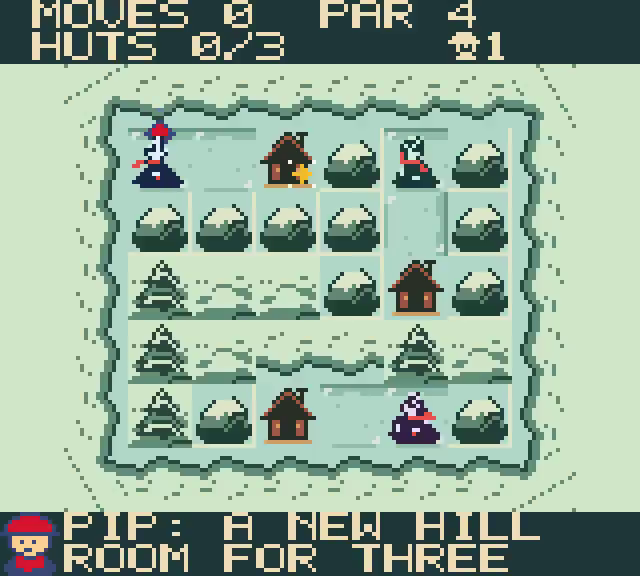
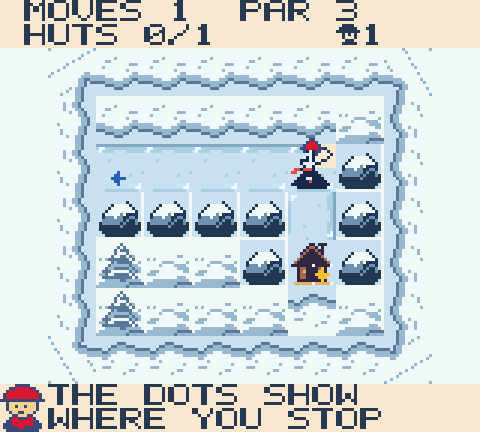
The one rule change: an empty hut stops a sled the moment the kid reaches it, the kid goes inside and blocks other sleds, and you select that kid and push to slide out. Dots show where each push will end, and Coach Pip teaches it with an illustrated goal. The solver rechecked all 60 boards, kept 25 layouts and rebuilt 35, and 44 pars changed. On Redcap Ridge a beginner computer player cleared 11 of 15 boards instead of 1, and the first hill's continuous run dropped from 318 to 115 seconds.
An excerpt from the U2 route reel.A later slope with a wider set of route choices.U1. The original route across Glass Tarn.U2. Glass Tarn with numbered hats, landing markers and the updated HUD.Coach Pip says THE DOTS SHOW WHERE YOU STOP, with a landing dot and a gold-marked hut on the board.A Redcap Ridge board with the new text HUD showing moves, par and huts.
· U2 handheld controls
Getting the handheld's own buttons to work
The first handheld check of U2 saw no physical A press, and the title only advanced through a temporary test bridge. The launcher was then fixed to pass a Sled Hill specific controller setup, so physical A, B, Start, Select and the D-pad all work without the bridge. The shipped cartridge itself did not change.