Lighthouse Leaper began under the working title Rising Tide: six rules for climbing a tower while the sea chases you, tested on plain grey blocks. That same day it grew into twelve towers with a toy-fort look and shipped as Up the Breakwater. Over the next three days it gained a Lamp Keeper who teaches and then talks, rope walls, a steadier camera, and a real lantern room at the top of every tower, each modeled on a New England light. On November 10 it took the name Lighthouse Leaper.
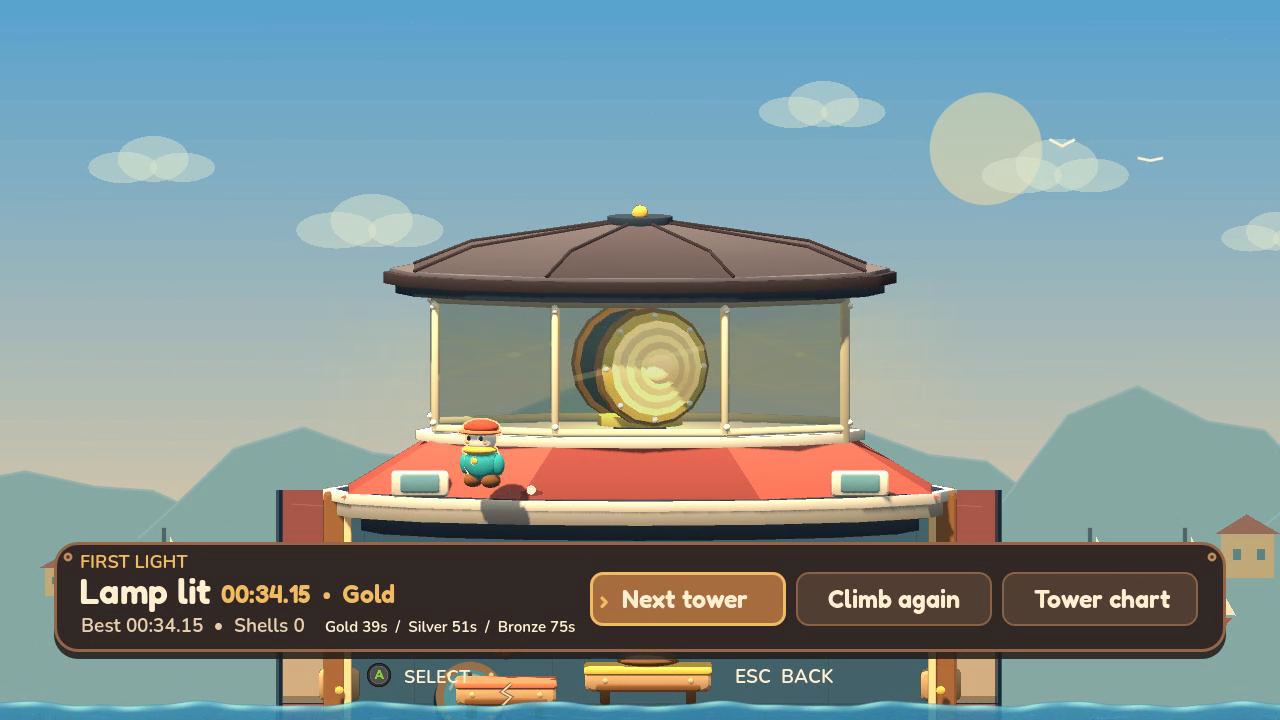
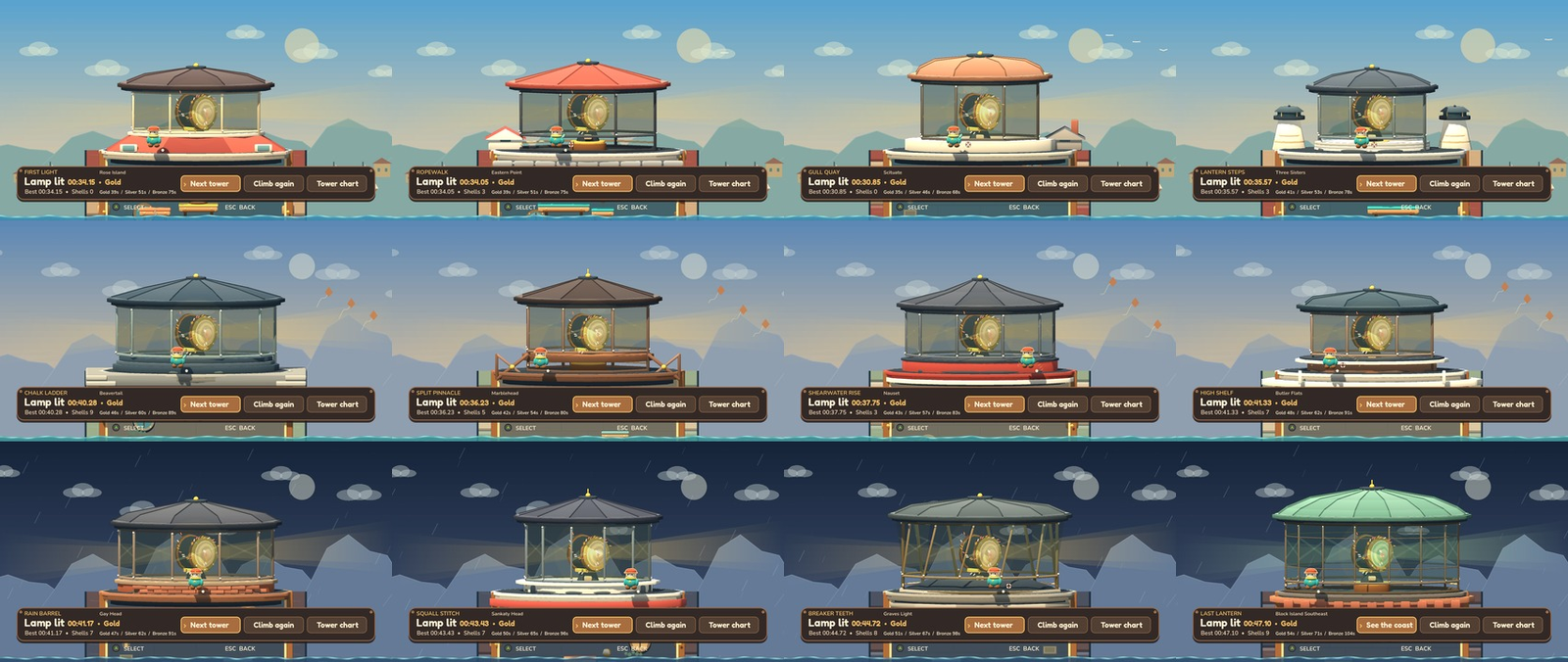
The camera pulls back to show the entire lighthouse before the results slide up. Daytime beams are brighter, and the Tower chart names the twelve New England lights that inspired the game.
Nine Massachusetts-inspired lantern rooms join the Rhode Island trio. Every campaign tower now has a distinct summit, including a cluster of three lights, open iron braces and diagonally glazed windows.
Harbor, Cliffs and Storm now end beneath lighthouse crowns inspired by Rose Island, Beavertail and Block Island Southeast. Land at the top and watch each lens sweep the coast.
Gull lifts, bounces, and falls stay in frame. Rocks give two seconds of warning. The Keeper is voiced offline, with three casting auditions in PLAY ME.
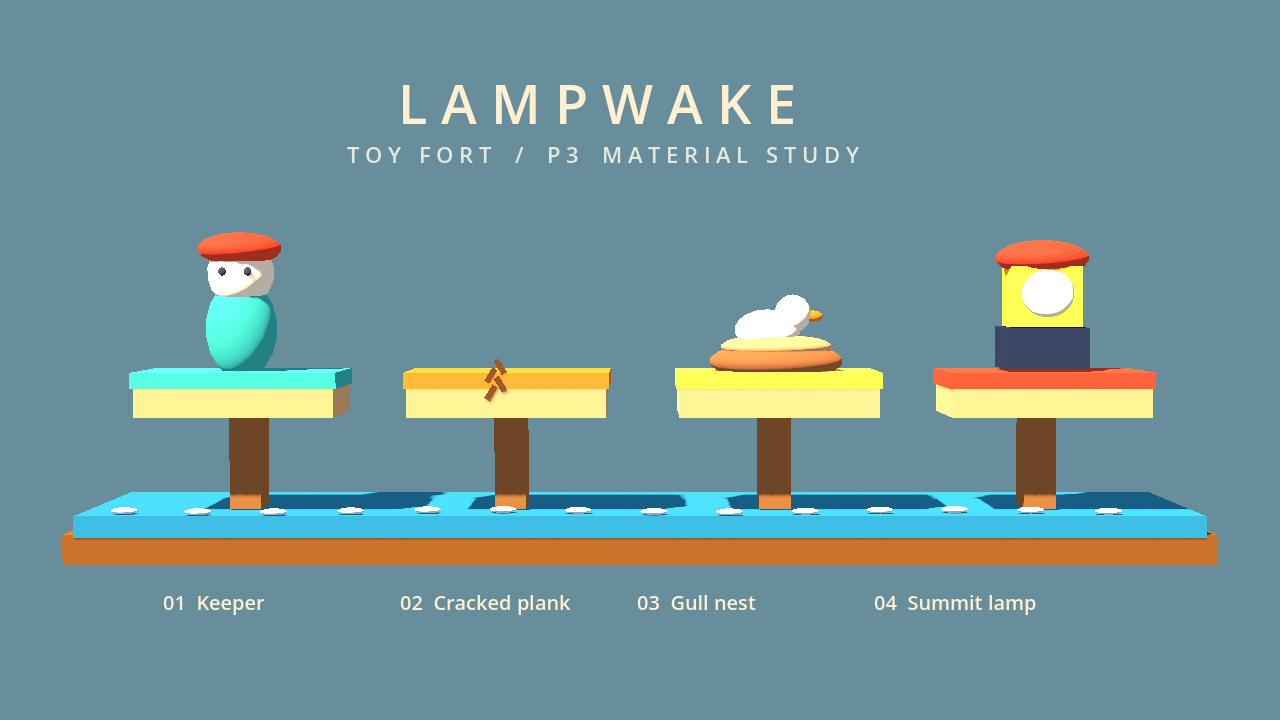
The team froze six rules for a tide-chasing tower climb and wrote down twelve towers. A test render showed the keeper, a cracked plank, a gull nest and the summit lamp on felt-like blocks over a painted sea. The game was still called Rising Tide, and the picture carries a candidate title, Lampwake.
Four test pieces on posts over a blue sea: the keeper, a cracked plank, a gull nest and the summit lamp.
2ToyOne rough mechanic, to prove the core is fun.
Turning point
· G1 toy
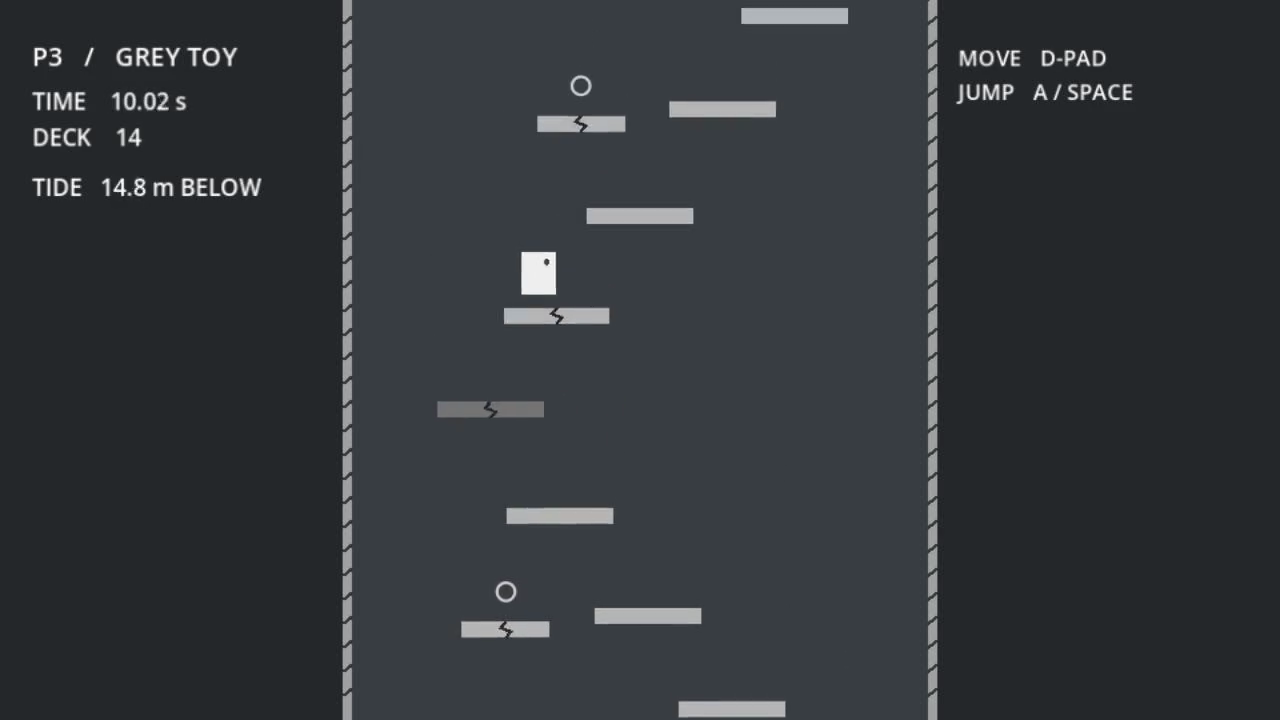
One grey tower and a rising tide
The first playable was a single long grey tower with real controller inputs driving the test players. A skilled player cleared it in 36.73 s with one wall kick. A novice failed after a wall kick and a missed transfer, with only 0.53 s of warning.
An early wall-climb route built out of simple test geometry.A frame from the vertical movement toy.
· G1 fixes
The tide warning was too short
Early toy runs showed only 0.15 to 0.22 s of warning on fast falls. Fall speed was capped at 920 px/s and tide danger was marked at a 510 px gap, so every measured failure gave at least 0.52 s. A review also caught that the first skilled route skipped the walls entirely, so a deliberate wall takeoff was added at row 17.
3ContentLevels, art and sound go on top.
· G2 Content
Twelve towers and a whole game around them
All twelve towers became playable with a title screen, first-launch guide, tower chart, pause, options, credits, win and loss screens and a coast ending. A saved logbook keeps best times and shells and recovers if the main file is damaged. Eleven original sound effects were chosen from 22 candidates made with ChirpSmith, and four music loops were added.
Turning point
· G3 Polish
The grey blocks become a toy fort
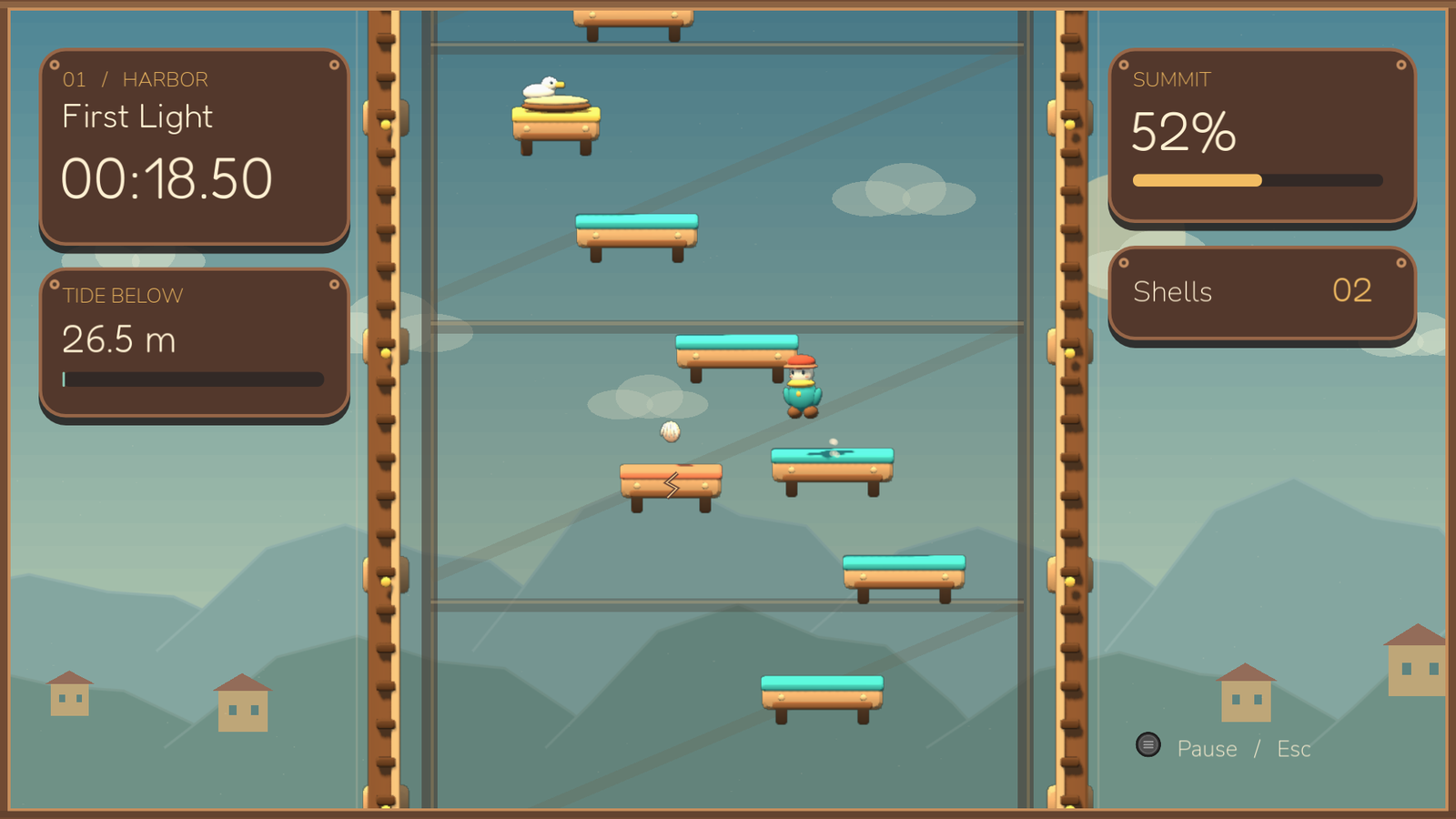
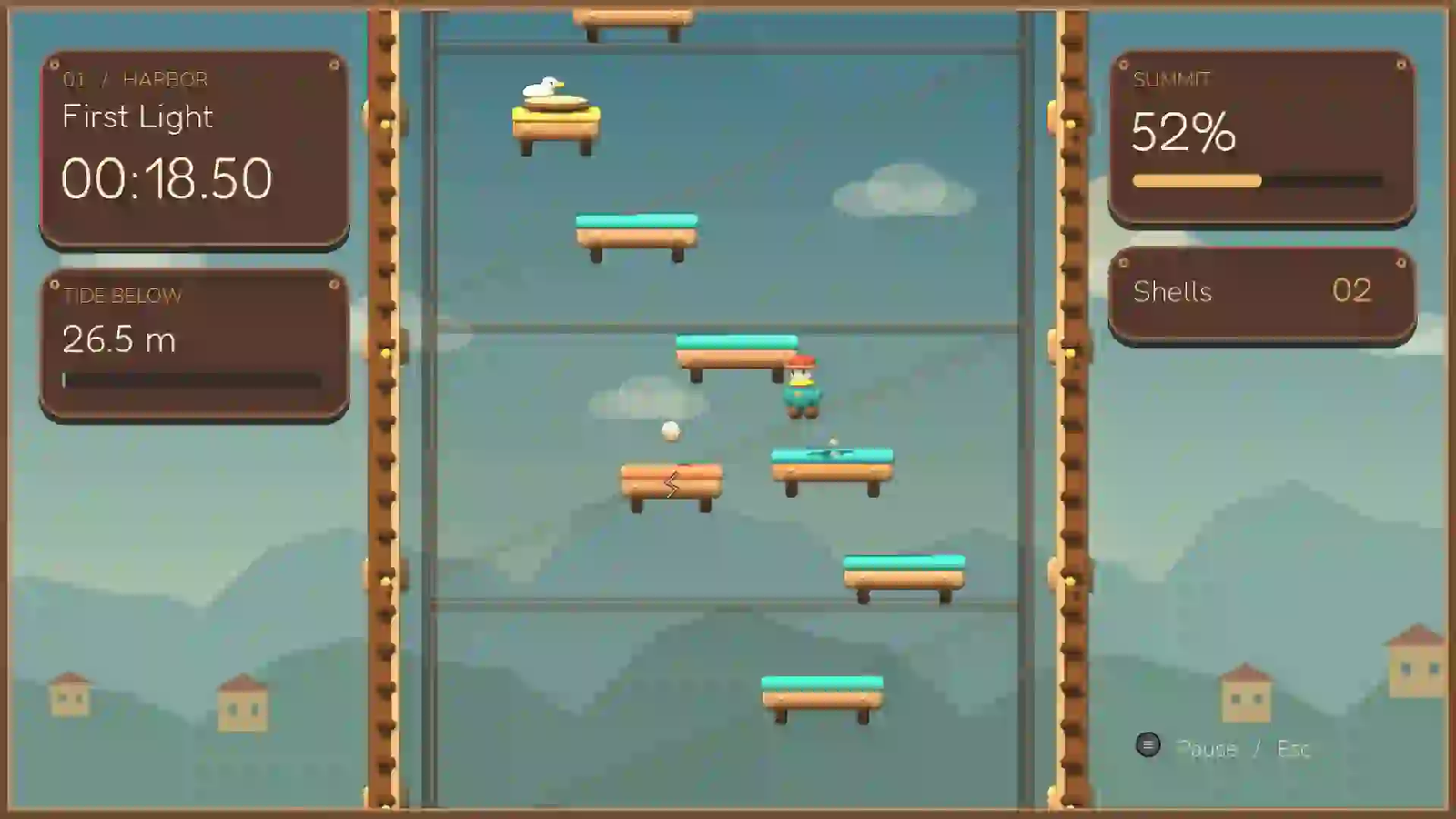
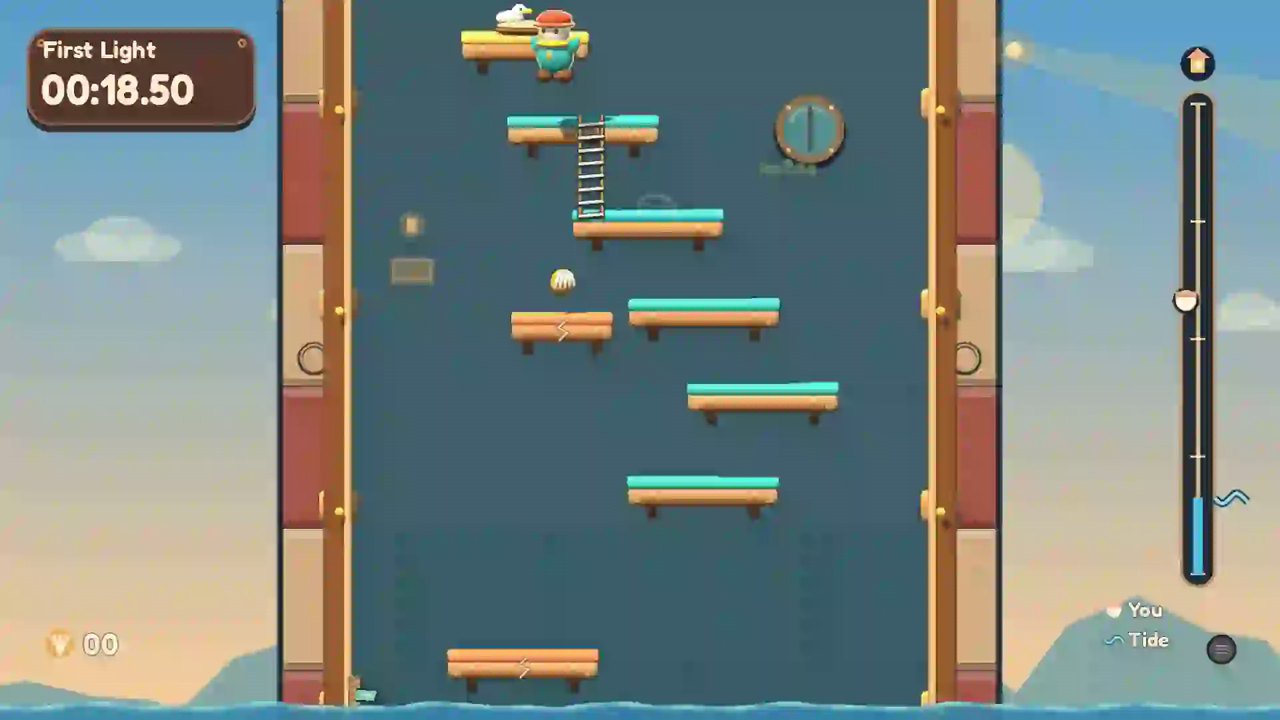
The flat grey stage was replaced with beveled wooden 3D planks lit by one warm lamp, painted harbor, cliff and storm backdrops, a cracked-plank fuse, tide chevrons and a summit progress bar. The team inspected 24 stills at desktop, handheld and 4:3 sizes. The desktop check held 60 fps with no sample below 56.
First Light mid-climb on wooden planks, with the timer, tide distance, summit percentage and shell count on wooden plaques.
4PlaytestReal hands on it. Fix what trips them up.
· G4 Playtest
Fresh eyes ask for a longer warning
A review of the recorded runs worried that the shortest fall warning was 0.483 s and that retry and the lamp were not shown. The warning now starts earlier on fast falls and stays on until the tide gap recovers, lifting the shortest warning to 0.867 s. A new clip shows the loss panel focusing Try again and a restart within two game ticks.
5Ship checkIt has to run on real hardware.
Turning point
· G4 Ship
Up the Breakwater ships
The game shipped under the title Up the Breakwater after searches found an exact Rising Tide game and an existing Civilization expansion, and Lampwake also had an exact-title match. A 30-minute play soak ran 44 clears with no failures. On the handheld, 125 of 125 replay hashes matched the Windows build and it averaged 59.83 fps.
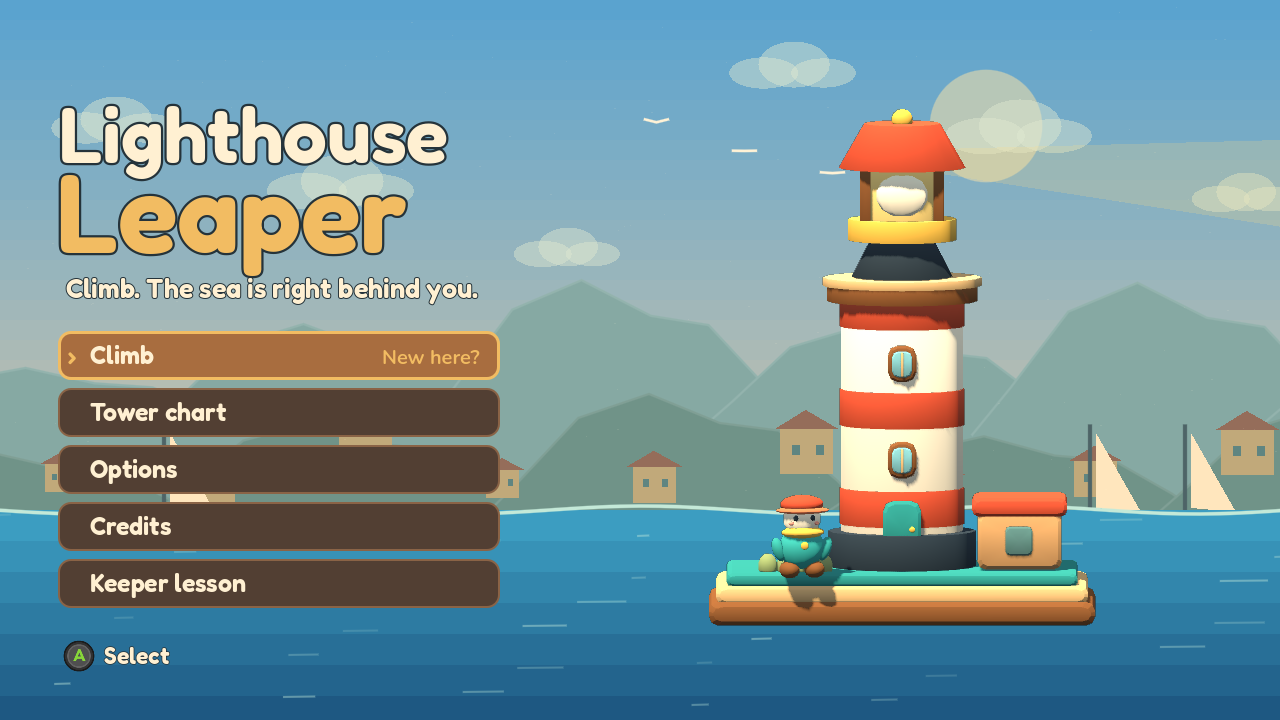
The title lighthouse with red and white bands, a coral roof, a small hut and the keeper on the jetty.
6UpdatesWhat changed after release.
· U1
A Lamp Keeper lesson and a tide you can read
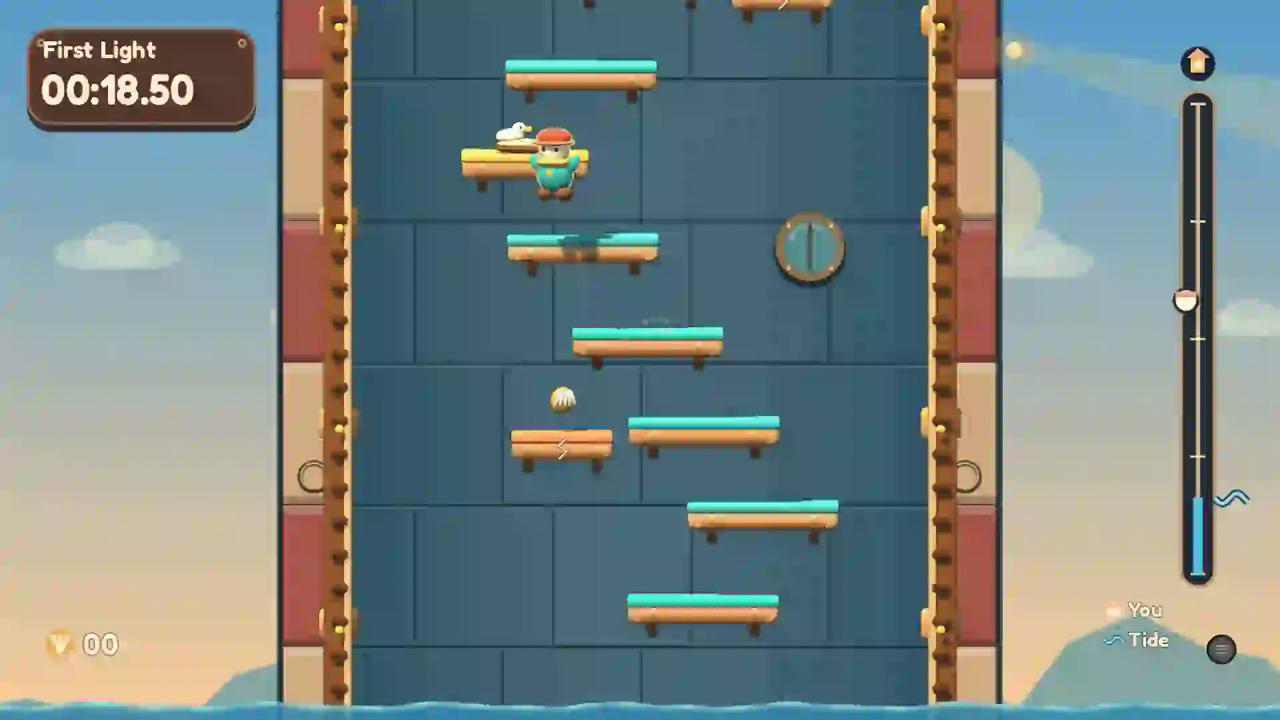
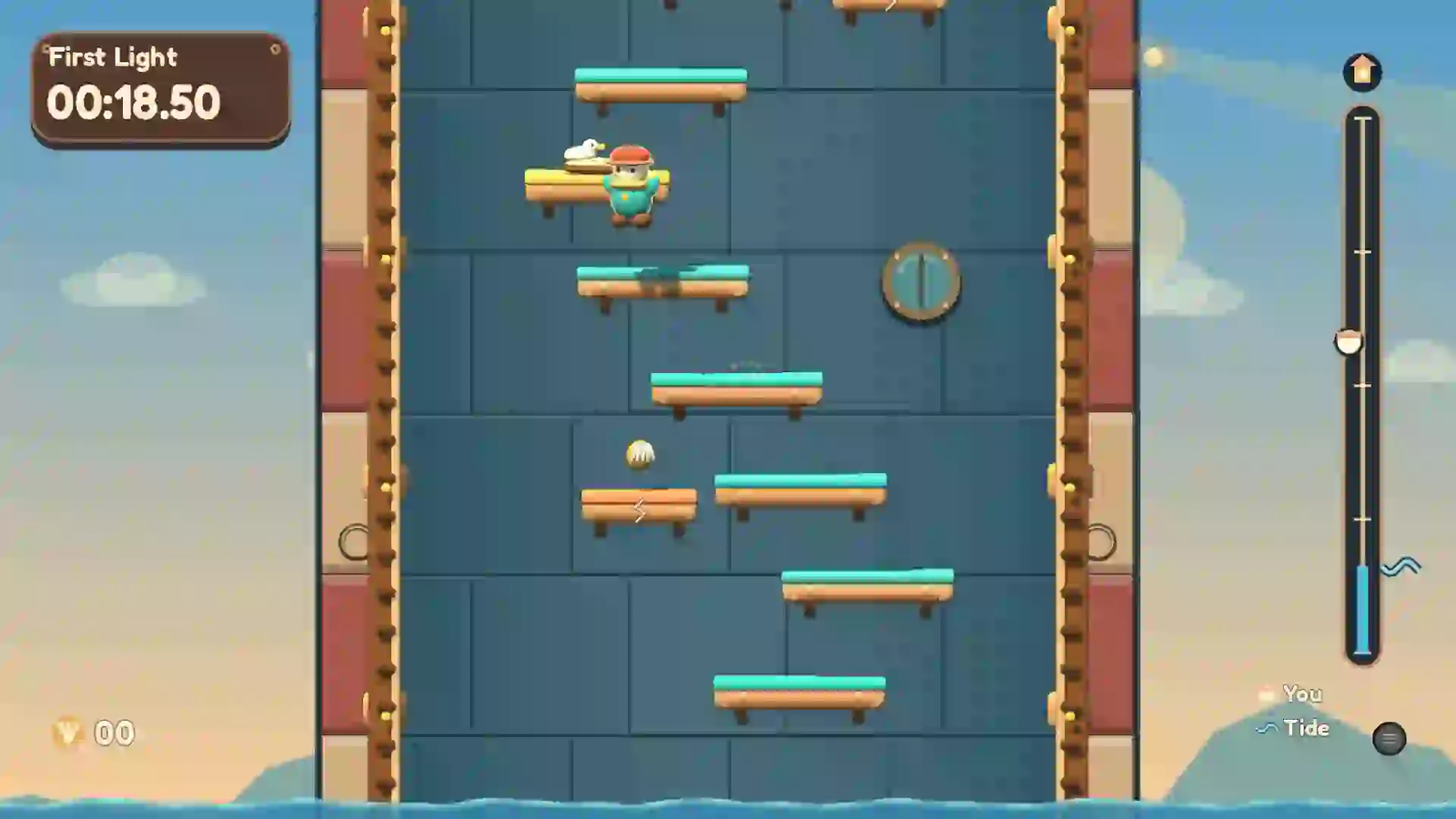
A guided Keeper lesson now teaches jump, wall kick, climbing, the tide, cracked planks and nests. Novice players went from clearing nothing to clearing the first tower on the first attempt in 48.70 s and all four Harbor towers. The tide became a tube beside the climb plus a You and Tide legend, and in the lesson the tide waits until step four.
Before U1: plaques on both sides and a plain meter.After U1: stone wall behind the planks, a corner timer and a tall tide tube with a You and Tide legend.
Turning point
· U2 · 1.2.0
Rope walls, new platforms and a steady camera
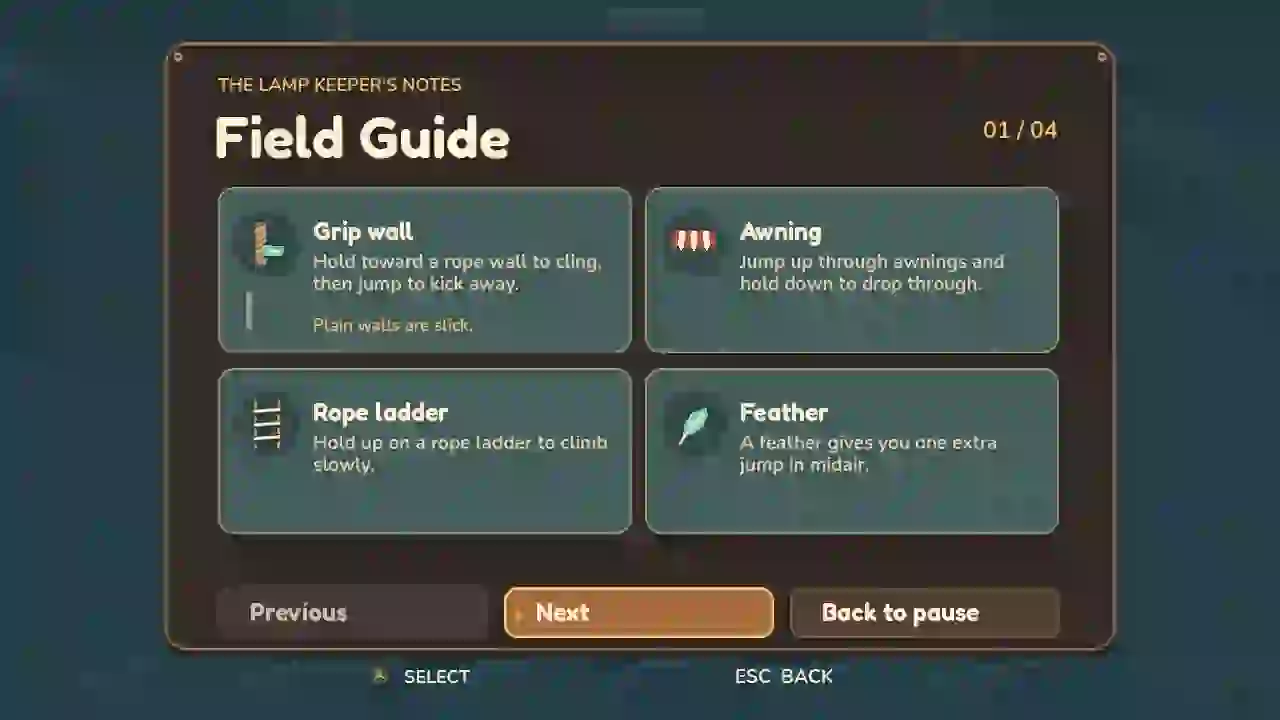
Rope and green tags now mark where you can cling and kick, while plain stone stays slick. Fifteen new tower elements joined the climb, including awnings, ladders, a Life Ring, bells, crabs, falling rocks, gusts and lightning, plus a Field Guide. The camera stopped following short hops, cutting wall movement from 77 px to 0 px over ten jumps.
Before U2, the camera follows the short hops and the wall moves in frame.In U2, the same ten hops play against a fixed view.Harbor scene before the update.The harbor in the updated build.The Field Guide page showing grip wall, awning, rope ladder and feather.
· 1.2.1
The Lamp Keeper gets a voice
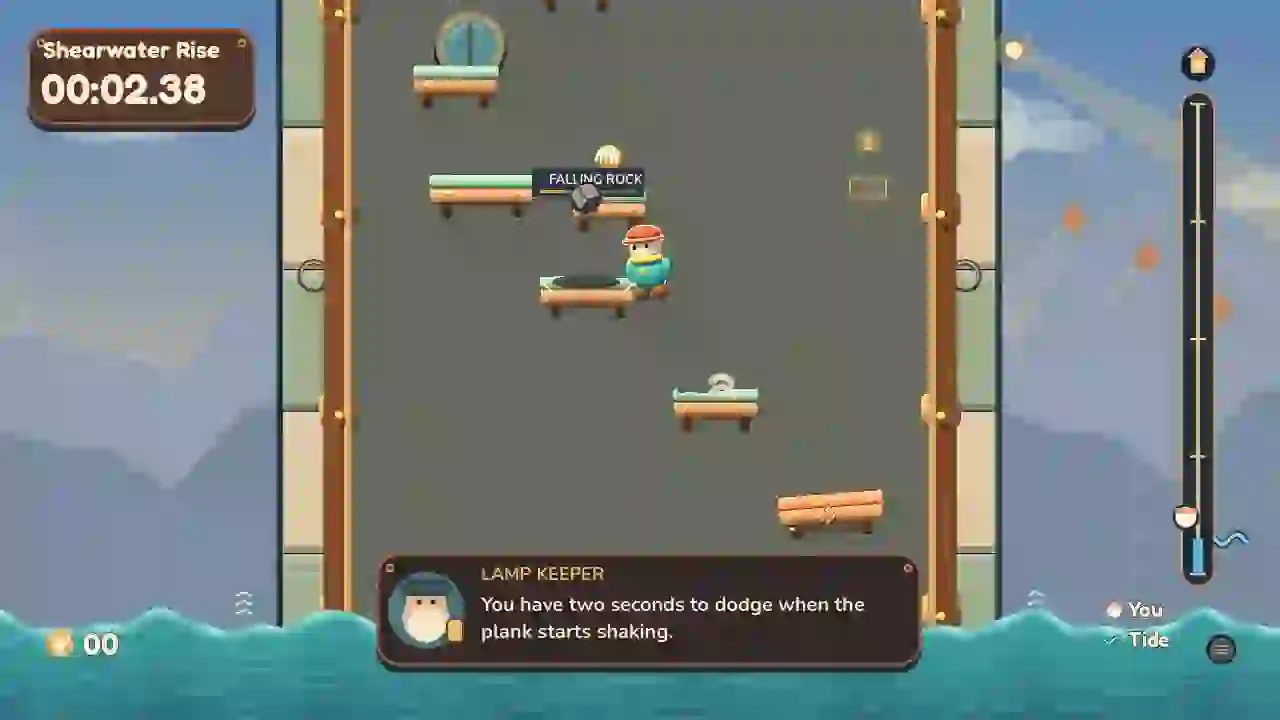
Twenty-six Keeper lines were voiced offline, with music ducking while he speaks, a volume slider and a B button to dismiss. Falling rocks now warn two seconds ahead with a countdown on the plank, and the camera keeps the keeper's feet inside a set band. The handheld matched 120 of 120 replay hashes.
A falling-rock label and the Lamp Keeper's speech box at the bottom of Shearwater Rise.
Turning point
· 1.2.2
A real lantern room at the top
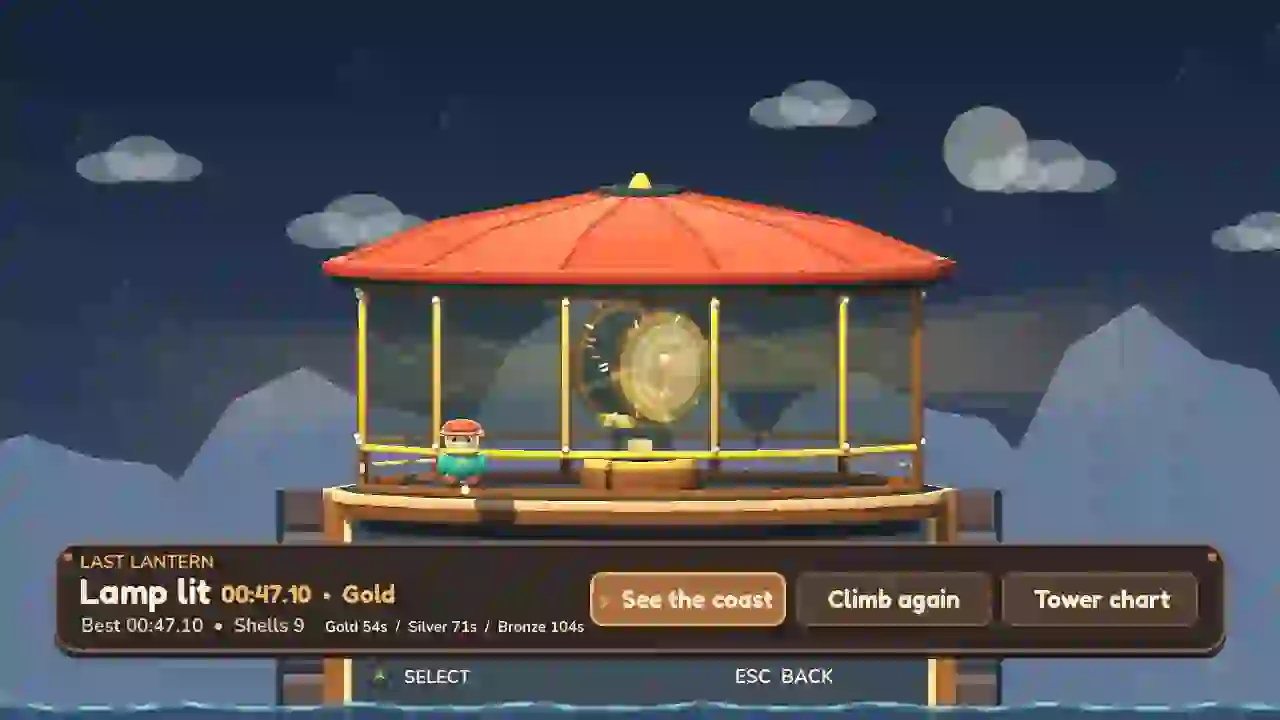
The last landing became a lighthouse gallery with twelve glass panes under a coral roof and a lens that lights when you clear the tower. A draft hid part of the keeper behind the floor, so the keeper is now drawn in front. Packages were built, but the handheld stayed on 1.2.1.
The Last Lantern gallery at night with the lens lit, the keeper on the deck and the results bar below.
· 1.2.3
Three Rhode Island lights
Harbor, Cliffs and Storm now end under crowns inspired by Rose Island, Beavertail and Block Island Southeast. The team compared six Rhode Island lights before choosing three that read as different shapes at 426 by 240 pixels. The game suite passed 31 checks.
A reel of lighthouse summits from the Rhode Island routes.One of the Rhode Island summit views.
· 1.2.4
Twelve different New England lights
Nine Massachusetts designs filled the rest of the campaign, so every tower has its own summit. They include a cluster of three small towers, a dark iron skeleton and a lantern with diagonal glazing bars. The Keeper lesson keeps its own practice room, and the suite passed 31 checks.
A grid of all twelve lantern rooms, each with a different roof, base and sky.
· 1.2.5
The camera pulls back when the lamp lights
The summit reveal now pulls back from crown to base as the lens ignites, and the results card starts sliding at 1.5 s. Pressing the button starts the slide early. A twelve-tower handheld check matched all 474 hashes at 59.83 fps, and the largest tower start frame was 104.78 ms.
Turning point
· 1.2.6
Up the Breakwater becomes Lighthouse Leaper
The game took its final name, Lighthouse Leaper, after web, itch, Steam and app-store searches found no exact match. A test profile holding only the old save folder still loaded Continue and kept the first tower's rank, three shells and the sound levels. All 474 replay hashes matched 1.2.5.
The Lighthouse Leaper title screen with the lighthouse, the keeper and the menu.