MORTAR set out to be a classic wall-building cannon game, but cooler: place cannons, fire, then rebuild your walls before the next volley, with land and gold on top. In two days it went from a bare test board to a full match you could play on a handheld. Then the first real playtest stalled before one round was over, because it was too hard to see what was going on. Six rounds of readability fixes followed. Each one helped, and the game still got harder to explain, so on November 7 it was shelved. The lesson stuck: keep the simple core, and cut rules before adding screens.
The written plan took the round structure of a classic wall-building cannon game: place cannons, fire, then rebuild your walls under a timer. Land only counted when it was sealed inside walls, and sealed land would grow an economy. The look was picked the same day, a chunky toy-diorama style with a low, long-lens camera.
2ToyOne rough mechanic, to prove the core is fun.
Turning point
· M0
A bare board that plays back the same every time
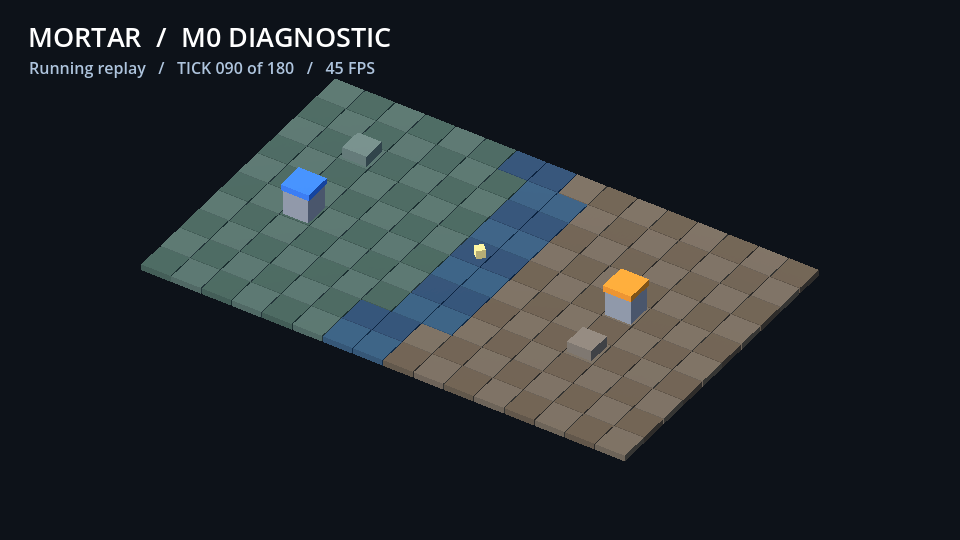
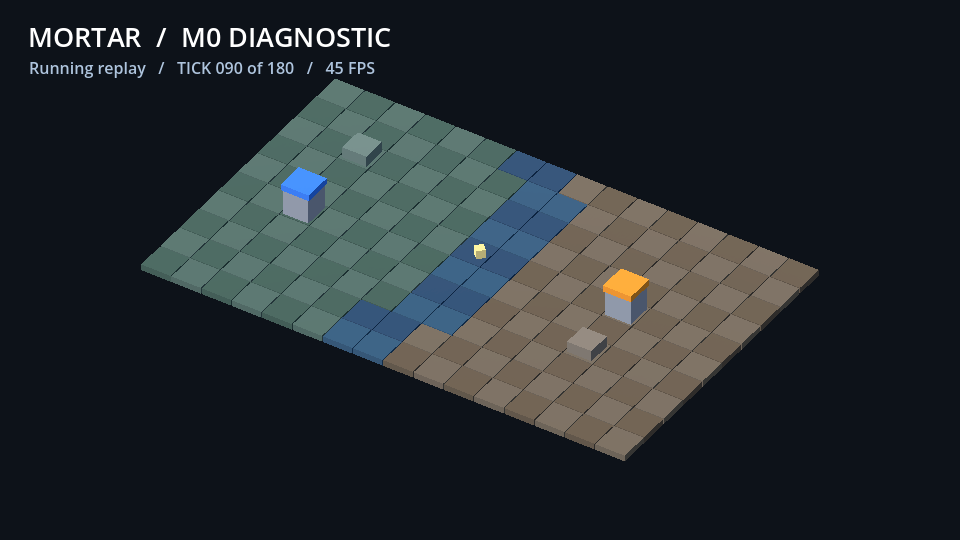
The first build was just a tilted board with a river, two castles and a moving test cube. It proved the game would run the same way on a PC and on the handheld: all 180 recorded ticks matched, at 60 frames per second. A test also caught a deliberately broken wall check, where a diagonal gap wrongly counted as sealed, so the sealing rule was trusted from day one.
A brief cannon diagnostic from the M0 proof.The M0 cannon diagnostic as a still.The M0 test board: a blue and an orange tower either side of a river, with a small cube moving between them.
Turning point
· M1 Quick Play
The whole match loop works
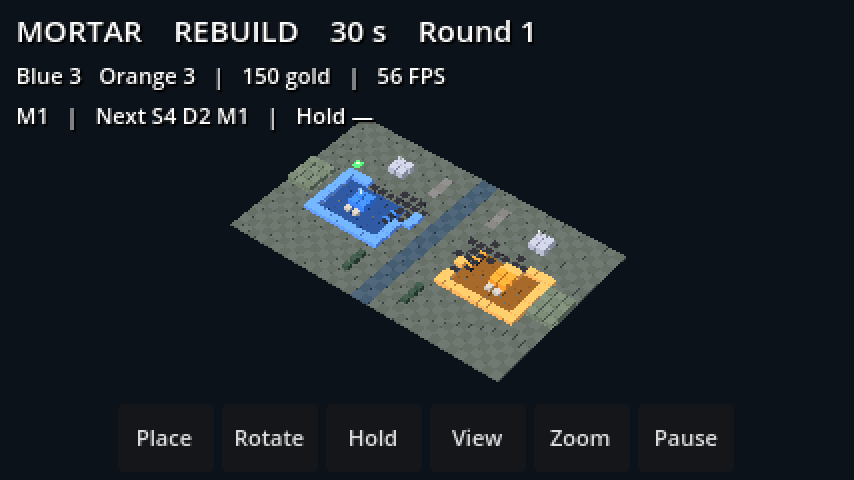
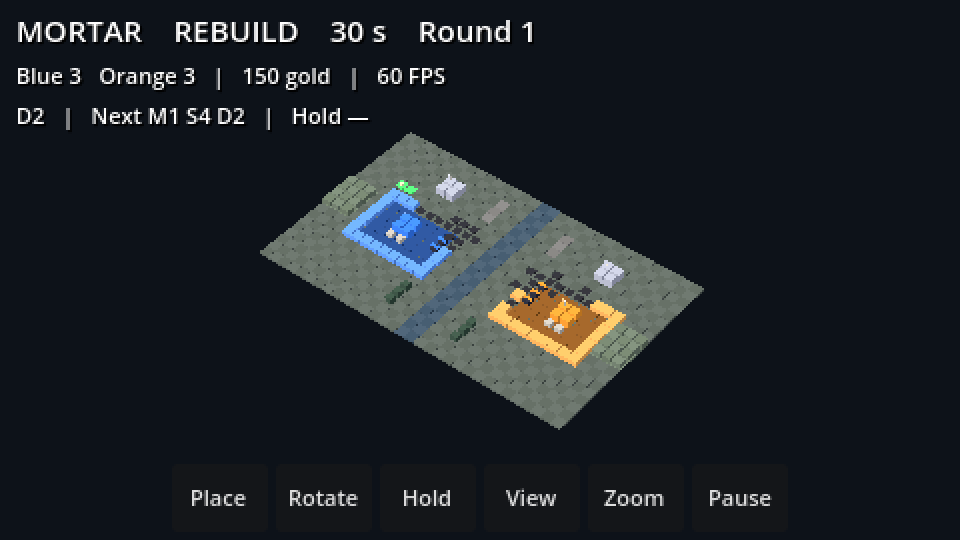
Quick Play put every phase in one match: pick a castle, place cannons, battle, rebuild, harvest. You played blue against a computer rival on one hand-built 32 by 20 map, and gold paid for extra cannons. 100 computer-versus-computer matches all finished, but 54 ended in draws and the median match was under three minutes, far shorter than the planned eight to ten rounds.
A short playthrough excerpt from the M1 demo.Rebuilding the defenses between volleys.The first Quick Play Rebuild screen: two small forts, a river, plain text and six buttons at the bottom.
3ContentLevels, art and sound go on top.
· M1 review
The rival could not rebuild its walls
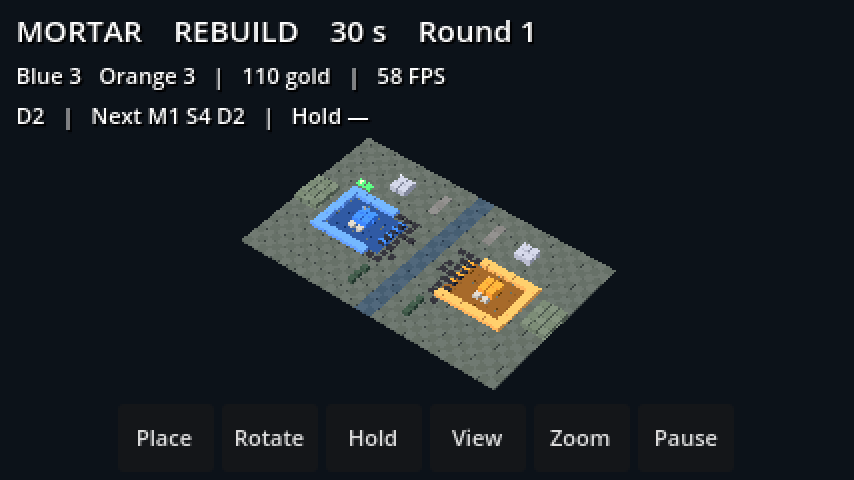
A review of the bot matches found the computer rival was capped at six wall pieces per rebuild, so it often could not close its fort and most matches fizzled into draws. The cap was removed and the rival now checks its walls properly. The castle starting spots on the right bank were also moved one tile so the two sides are true mirror images. Fifteen deliberately broken builds were each caught by a test.
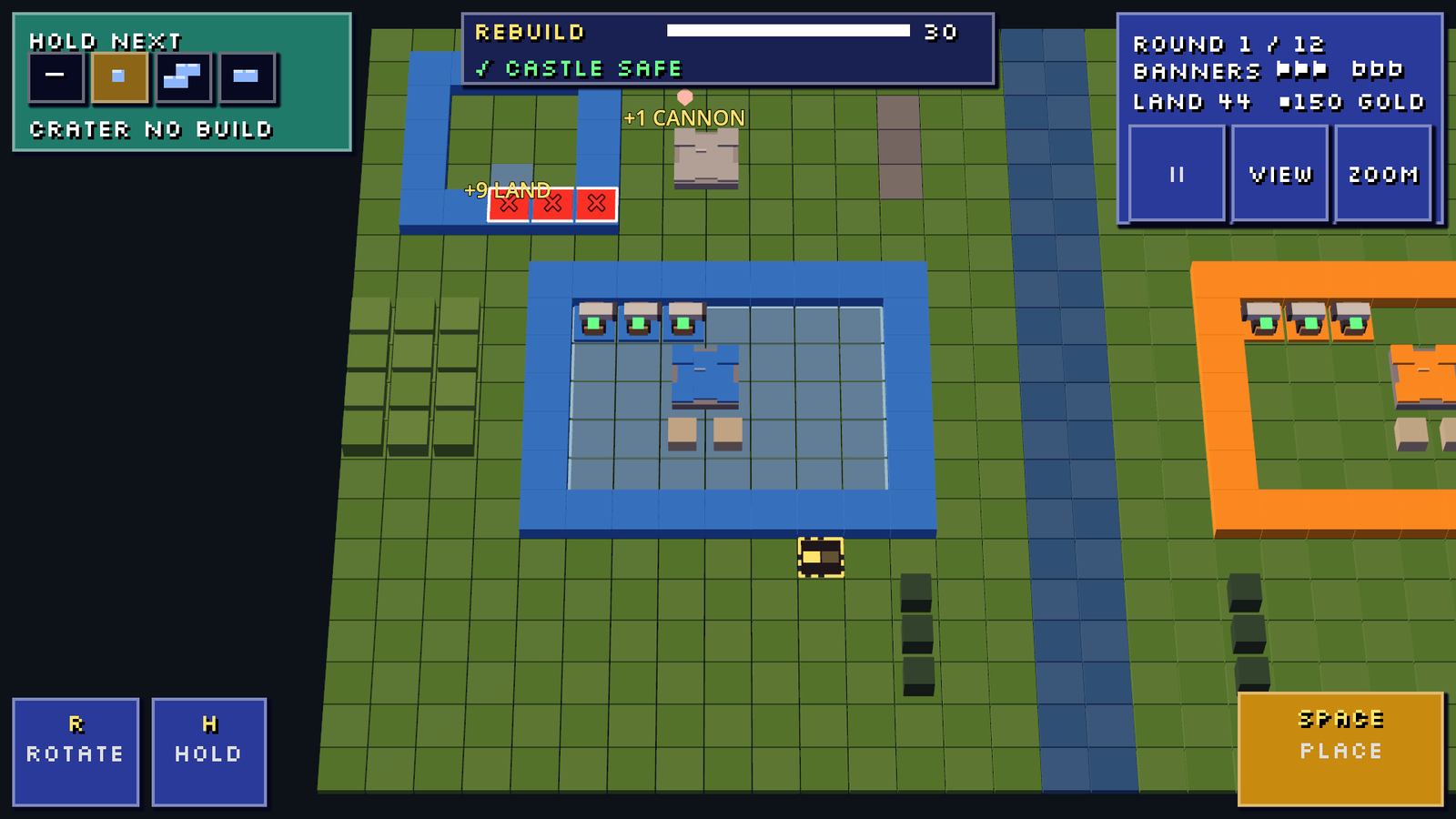
The Rebuild screen after the review fixes, on a small 854 by 480 window.
4PlaytestReal hands on it. Fix what trips them up.
Turning point
· M1 playtest
First time on the handheld: hard to see anything
The first playtest on the handheld stopped before one round was finished. The controls felt responsive, but the rules were unclear, and it was hard to see where to place walls or even where a cannon was. The tiles were only about 20 screen pixels wide. This started the readability rounds.
· M1-R1
R1: a straighter view for building
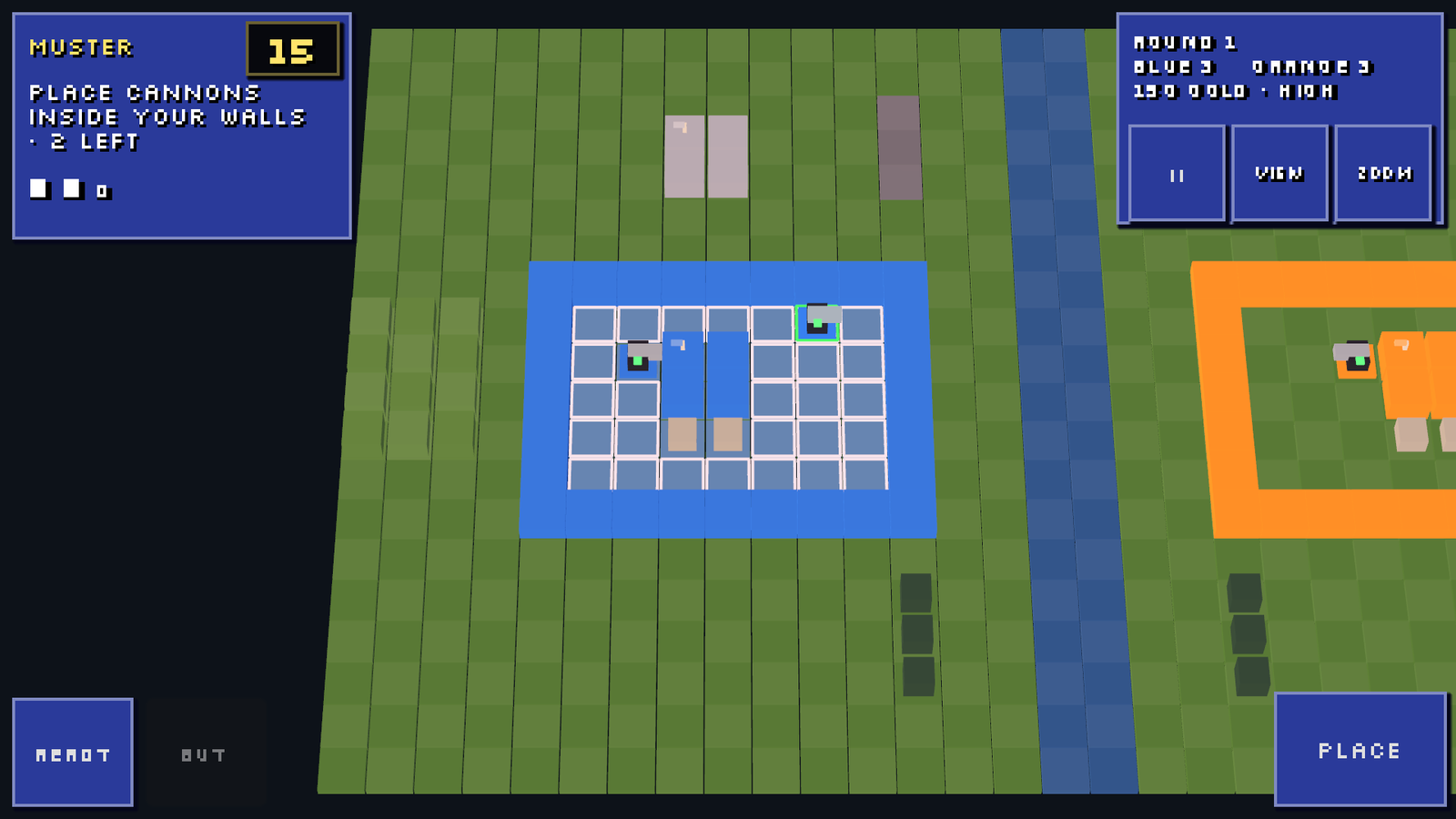
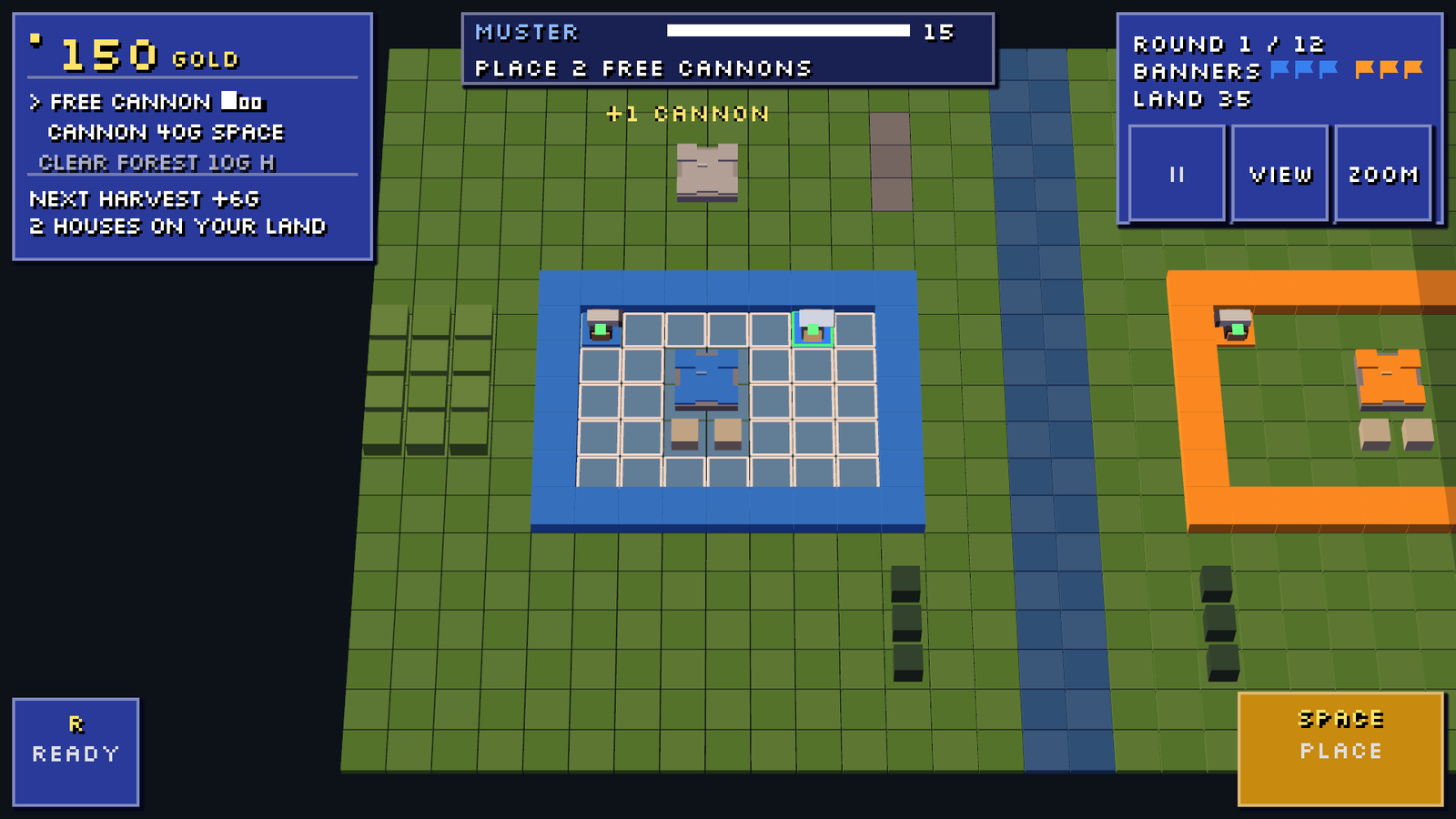
Building screens switched to a nearly top-down grid so squares read as squares, while Battle kept the angled view. Muster showed which tiles were legal for cannons, Rebuild showed a raised outline with an X on every blocked cell, and a first-run card explained the round. The matches themselves were not changed.
The R1 Muster screen with legal cannon tiles lit.
· M1-R2 and R3
R2 and R3: bigger text, shadows, and the stripe bug
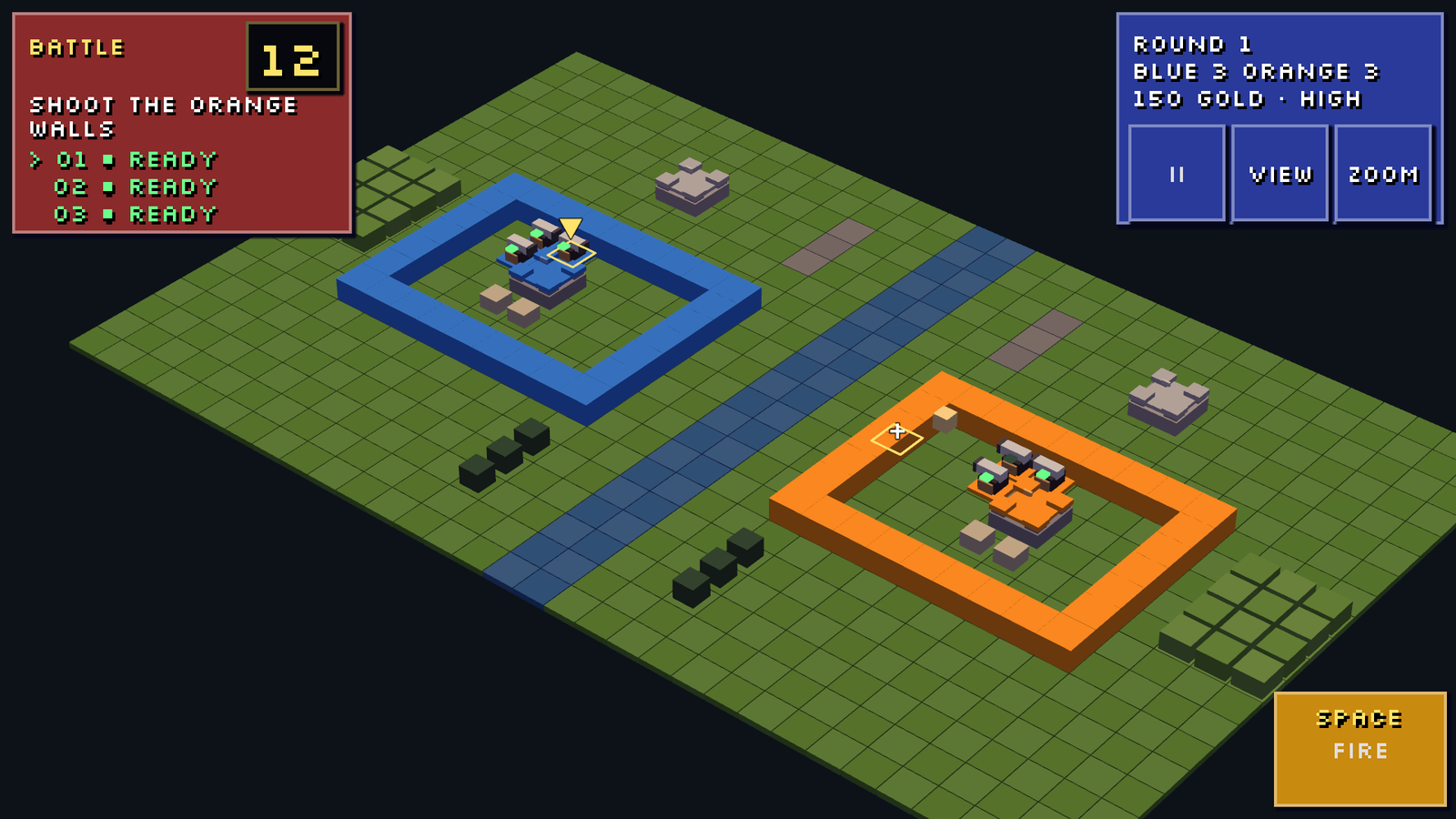
R2 made the HUD text 8 pixels everywhere, gave cannons bigger pads and green ready lamps, added corner towers to castles and a gold warning triangle on the leak path. Shadows then showed ugly stripes on the handheld screen. R3 fixed it by stopping flat ground from casting shadows and tuning the shadow bias until the wall tops cleared.
Battle in R2: blue and orange walls, cannons with green ready lamps and a fire button.
Turning point
· M1-R4
R4: land and gold finally explained
A second handheld playtest showed the player could not tell how walls made land, or how gold turned into cannons. The rule that a sealed pocket without a castle did not count was dropped, so every sealed tile now counts as your land. A chime and a floating land count appear when a wall closes, and the game waits for a Go press between phases.
A wall has just closed in Rebuild and the new land is counted.
· M1-R5
R5: a mirror test caught a lopsided rival
A new mirror test compared reflected placements and failed: the computer chose different wall spots for blue and orange on identical boards, because its search needed a piece to touch a wall at one pivot cell. The search was rewritten, and 400 balance matches were run. Banner flags, outlined text and a hold card were also added.
Turning point
· M1-R6
R6: every cannon tells you why it will not fire
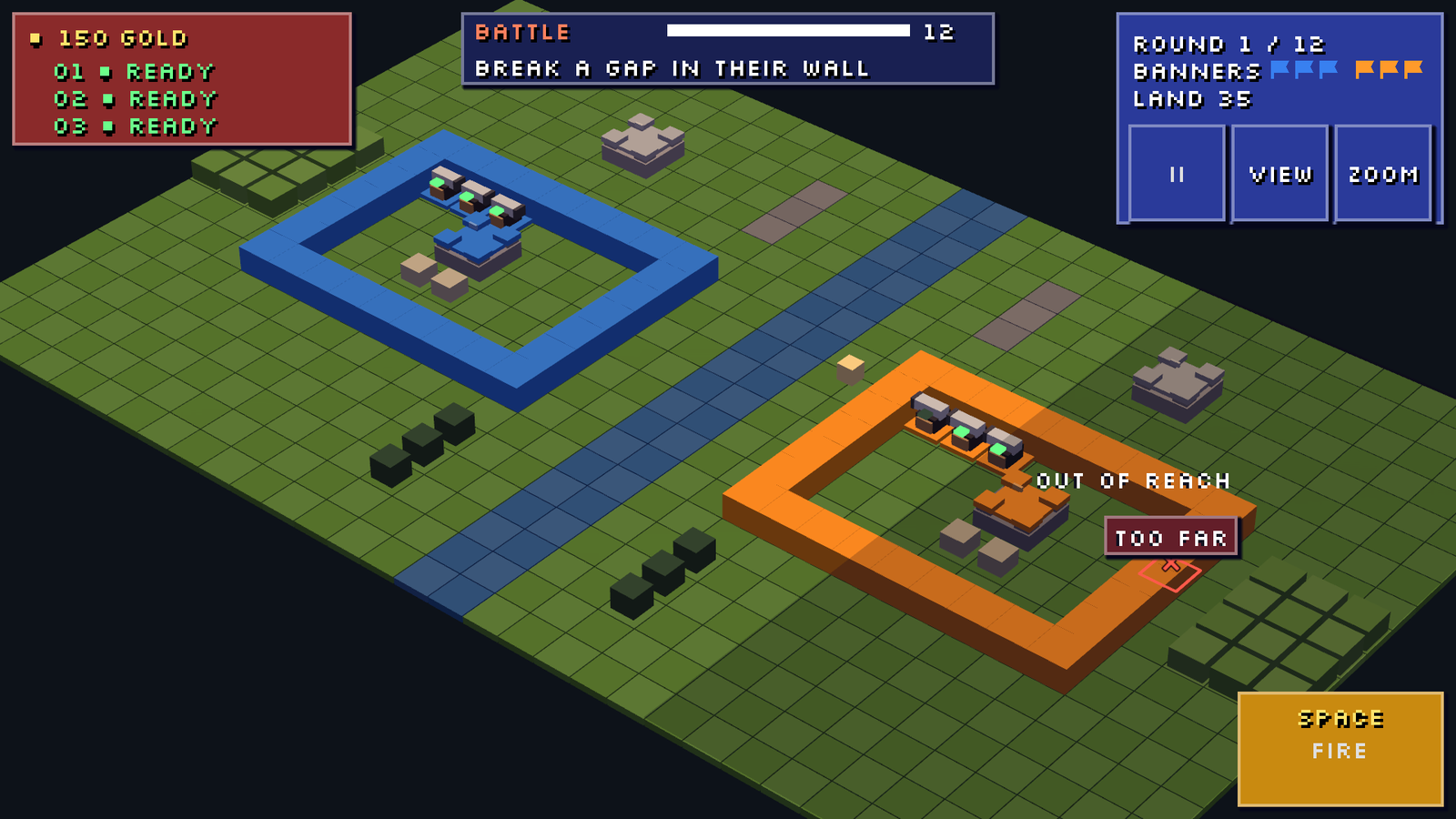
In round 3 the player could not fire and could not tell why, then stopped playing. The likely cause was range: a cannon placed near the home castle could not reach the far back wall. R6 added a TOO FAR tag, a shaded unreachable bank, a NO LAND row for stranded cannons, a real shop menu, and a recorder that keeps the ten newest matches so the next bug could be proven.
A reticle outside cannon range, marked with a red X and a TOO FAR tag.The new Muster shop in the top-left corner showing gold, free cannons and the price of a cannon.
Turning point
· Shelved
Shelved: the rules outgrew the game
After six rounds every screen explained itself, and the game was still a chore to play. It had been meant as a classic cannon game, but cooler. It had turned into a confusing 3D rampart with land, gold and a shop to keep track of. So it was packed away as a demo. If it returns, it starts from a plain core: cannons that hit anywhere, walls to rebuild, and nothing else until that is fun.